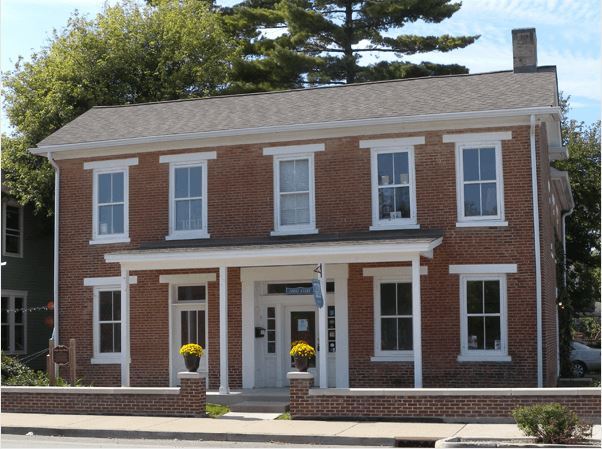
Granville Bishop House
Granville Bishop (1831-1902) could be considered the patriarch of the Hamilton County illustrator group. Bishop was born in Fayette County, Indiana. His family moved to Hamilton County in 1836.
Bishop was a self-taught artist who taught penmanship, painted decorations on wagons, and drew advertising signs on buildings to supplement his income from painting. He did well enough to support his wife and five children despite suffering from rheumatoid arthritis and not having full use of his legs.
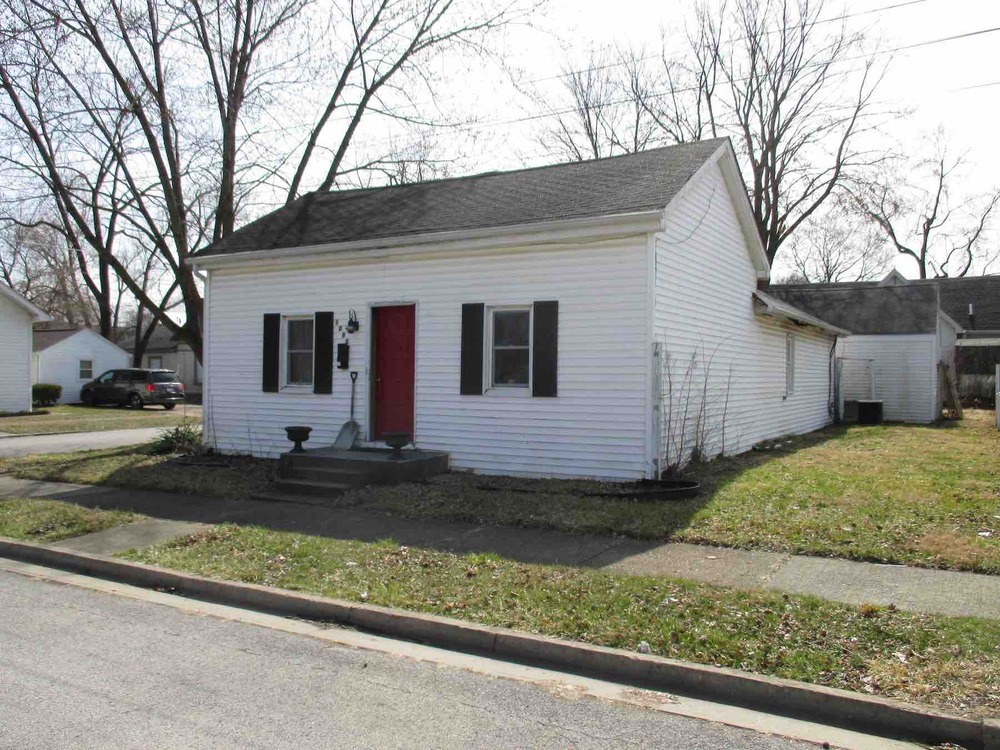
Bishop is discussed in Wilbur D. Peat’s book Pioneer Painters of Indiana (1954). Peat says that Bishop was, “incapable of doing any manual labor but finding that he had a natural aptitude for drawing, he turned to art and carried on a rather lively business with his landscapes, portraits in oils and crayon, store signs, and theatrical scenery.” This house on Mulberry Street was where he spent his final years.
There are two paintings of Bishop’s at the Indiana State Museum. The first, Oak Hill Farm, was completed sometime in the 1850s. The owner of the farm commissioned Bishop to paint his farm in Alto, Indiana in return for room, board, and a small commission. The agricultural landscape painting could be considered “primitive art” or folk art style. The second painting, Thayl Island, is very different in style. Painted sometime in the 1880s, it depicts a landscape with a river in the middle, large overhanging trees, and two deer on the right side. George Brehm described Bishop’s work as similar to the Hudson River School, and that influence is clearly seen in this painting.
A third painting, of the Oglala Lakota Native American Chief Red Cloud, was commissioned in 1891 to hang in the Noblesville lodge room of the fraternal organization the Improved Order of Red Men. The painting's location today is unknown.
Unfortunately, few other examples of his work exist today.
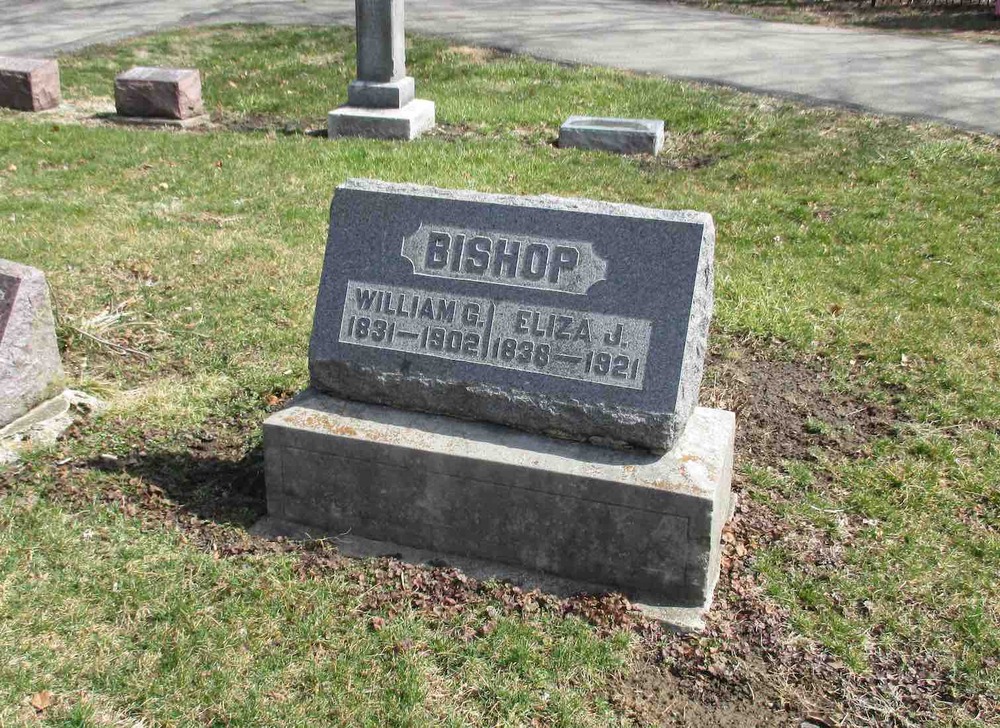
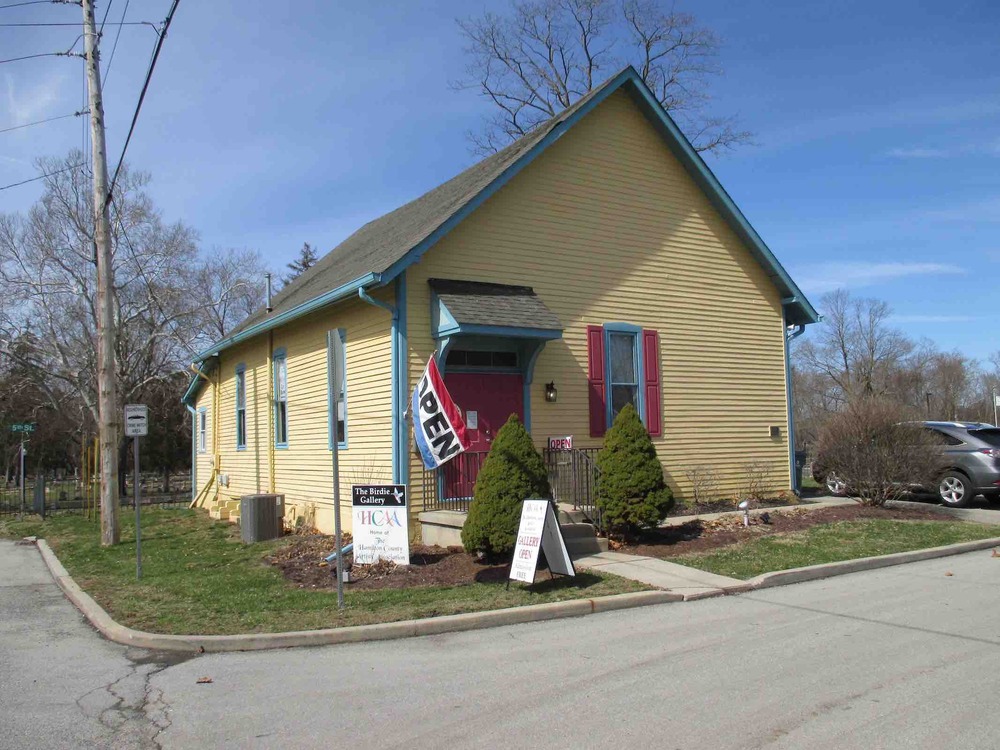
Upon his death, Granville Bishop was buried in Riverside Cemetery. Two institutions near Riverside Cemetery today help maintain Hamilton County’s connection to the arts. The Birdie Gallery is a former African American church that has been preserved as an art gallery. Nickel Plate Arts is an arts incubator campus that encourages modern illustrators and has hosted exhibits about Hamilton County illustrators.
Images