The Works Progress Administration (WPA) was created in 1935 by President Franklin D. Roosevelt as part of his New Deal to spark economic growth during the Great Depression. Headed by Harry Hopkins, a dedicated social worker, the WPA built or improved more than 2,500 hospitals, 5,900 school buildings, and nearly 13,000 playgrounds. Most of the WPA’s $11 billion in funding went for short-term "make-work projects" to assist the unemployed. The program provided funds for federal theater, arts and writers projects that enriched the nation's cultural life. WPA's National Youth Administration gave financial aid to more than 2 million high school and college students and to 2.6 million young people who were not in schools. The WPA was also instrumental in major construction projects around the United States.
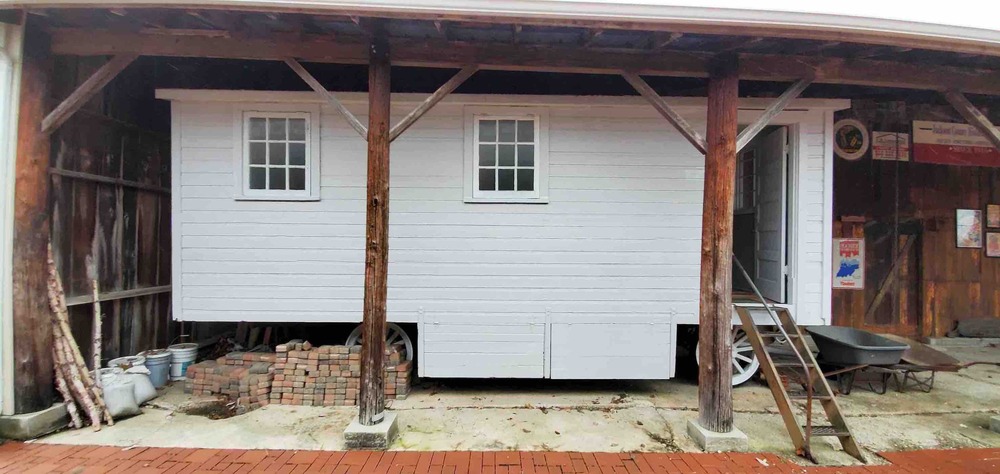
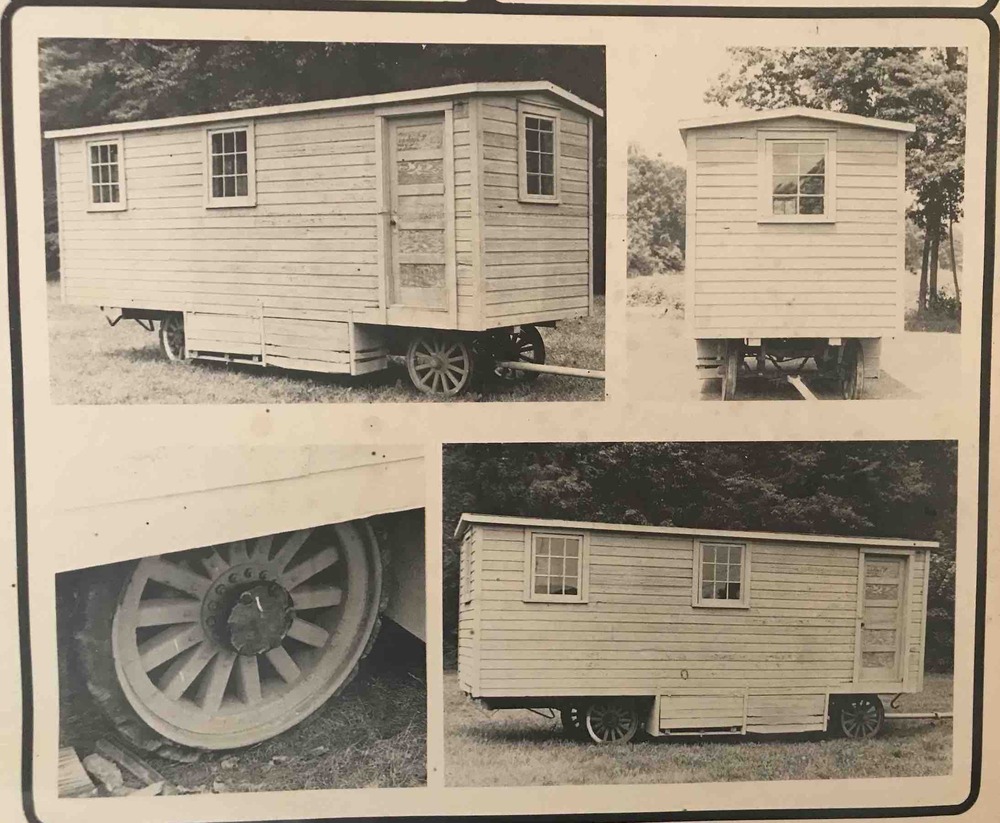
This wagon, first used in the late 1920s, was employed on work projects such as bridges and dams near Lake Greenwood in the area of Crane, Indiana. In 1940, the wagon was commissioned by the U. S. Navy to use at Crane Naval Weapons Support Center in Crane, Indiana, fifty miles west of Brownstown. Twenty-three feet six inches in length, eight feet four inches wide, and eleven feet four inches high, the trailer weighs approximately 10,000 pounds. Constructed on a steel chassis, the trailer boasts a barn wooden cabin, 4 wooden spoked wheels and solid rubber tires. It now sits under the lean-to at the Livery Barn.
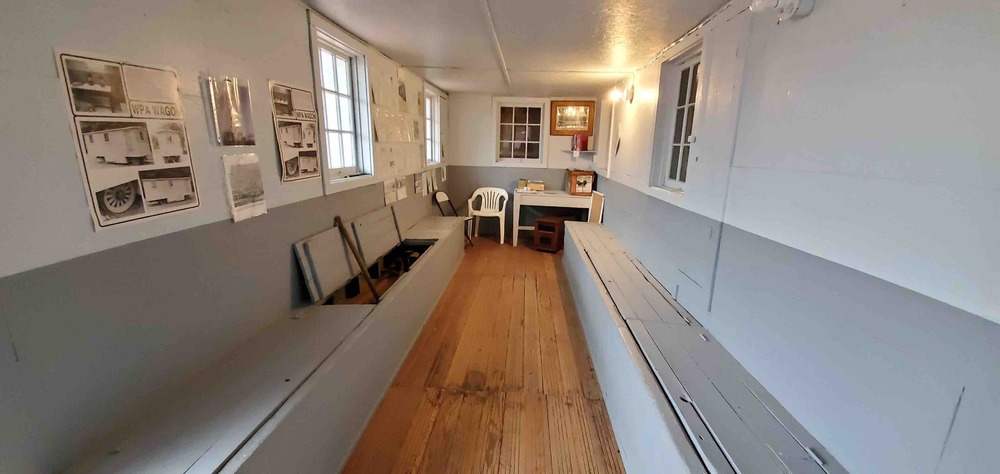
This wagon was used as a payroll office for WPA projects. WPA workers were employed 130 hours per month. The wage scale depended on the population of the county. For Jackson County, hourly wage rates were as follows: Unskilled labor was ¢35, intermediate skilled was ¢39, and skilled labor was ¢49. This meant that a skilled laborer made not quite $16 a week.
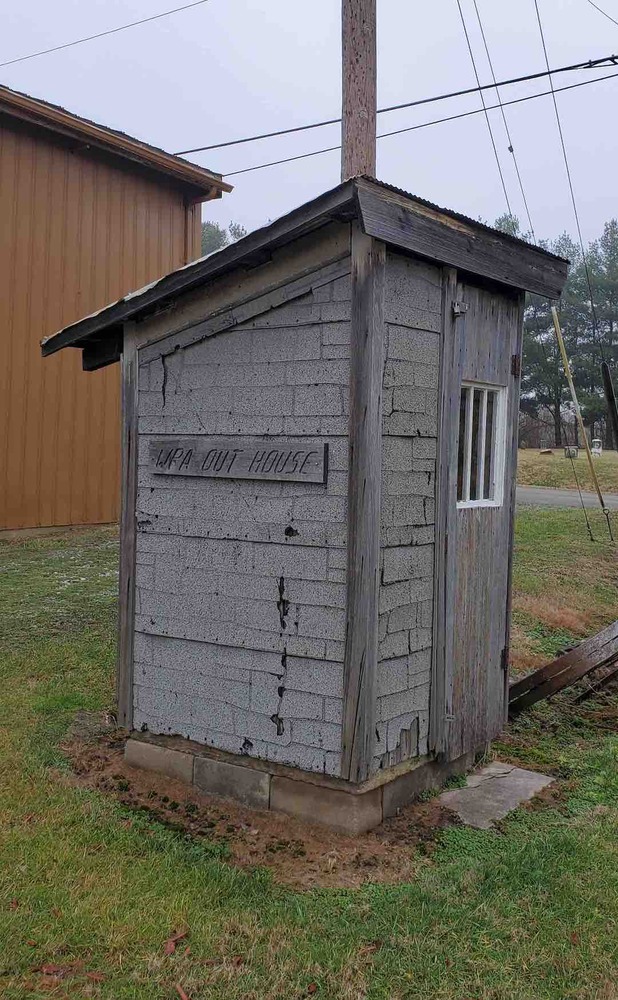
WPA Outhouse
A sanitary toilet plant employed 15 men and was opened in Stilwell's Garage at the west end of Brownstown, IN. Finished units cost $8.05. 573 of these concrete units had been installed in the county as of 1935. The WPA outhouse that can be seen on the campus of the JCHC came from Clem Robbins’ home in Tampico, Jackson County, Indiana. The family decorated it with wallpaper, some of which is still on the walls. Some of these necessary houses are still standing in the county.
Images