Eli Lilly and Company

One of the world’s leading pharmaceutical companies, Eli Lilly and Company sits on McCarty Street, where it has resided and grown for more than one hundred years. In 1876, after serving during the Civil War and failing at a series of other business ventures, Colonel Eli Lilly established his pharmaceutical enterprise in a minuscule brick building on Pearl Street. With a total of three employees including his son J. K. Lilly, Sr., “Colonel Eli” set out to bring scientific method to manufacturing medicinal remedies in a period when charlatans and frauds peddling patent medicines dominated the industry.
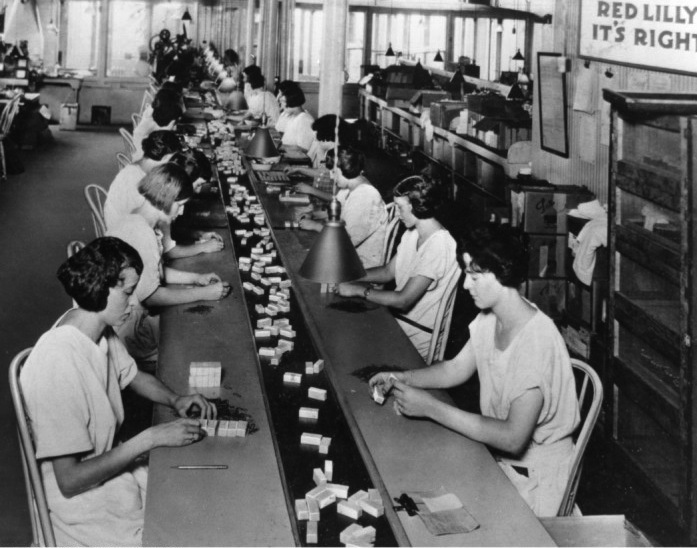
By 1890, J K. Lilly, Sr. assumed control of the growing company, which had relocated to McCarty Street after outgrowing its previous locations. Very much a family business, his two sons, Eli and J.K., Jr., soon joined him at what they sometimes called the “pill factory.” The company adopted modern, streamlined production and experimental research practices under the three Lilly men’s leadership. The company remained under the family’s private ownership until 1952 when the company went public. In 1953, the first non-family member, Eugene Beesley, became president of the business.
Medical Breakthroughs (1920-1965)
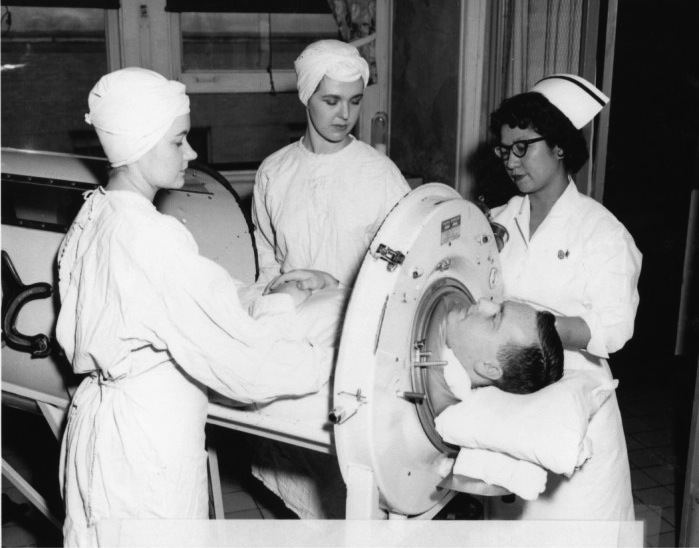
The Lilly Company played an important role in the development and manufacture of several important medical advances during the twentieth century. Until the 1920s, there was no effective treatment for diabetes mellitus, particularly Type 1 diabetes. Collaborating with three University of Toronto scientists, the company achieved the first successful large-scale production of insulin. In 1923, Lilly supplied the first commercially available insulin product in the United States, which helped save the lives of thousands and made the company a top-tier pharmaceutical manufacturer. During the 1940s and 1950s, the company manufactured several antibiotics, beginning with penicillin during World War II and later vancomycin and erythromycin. The company also became one of the chief producers of the Salk poliomyelitis vaccine, manufacturing 68 percent of the national supply in 1956. A polio outbreak in the early 1950s had debilitated thousands in the United States, many of them children. By the 1960s, the number of U.S. polio cases had diminished dramatically.
New Challenges and Old-Fashioned Values (1965-present)
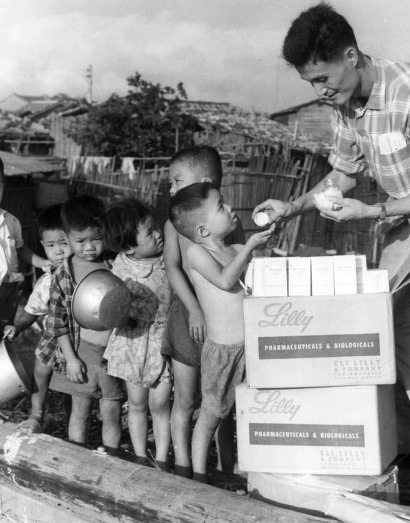
Eli Lilly and Company has experienced many of the same recent challenges as most pharmaceutical companies in the face of economic downturn and controversies over drug side effects. Corporate espionage has also proven a concern in recent years, causing companies like Lilly to increase security measures. Continuing the philanthropic tradition started by the Lilly family, the company supports humanitarian causes and activities throughout the local community, the state of Indiana, and around the world. In 2012, the company’s employees numbered nearly 38,000 in 17 countries, over one-fourth of whom work in Indianapolis. Lilly products are sold in approximately 125 countries. Today, the sight of the “Red Lilly”—the scarlet, looping logo of Eli Lilly and Company—is a familiar one in Indianapolis and around the world, seen anywhere from the zenith of corporate headquarters on Delaware Street to prescription bottles in a medicine cabinet.
Images